The exhibits
Each of these campaigns is documented — in trade journals, company archives, or the surviving ad copy itself. Read individually, they're historical curiosities. Read together, they're a manual. Watch for the same three moves in every one: a flaw is named, a catastrophe is attached to it, and a single cure is offered.
seven decades, one recurring machine
"The White Man's Burden" — selling empire as hygiene
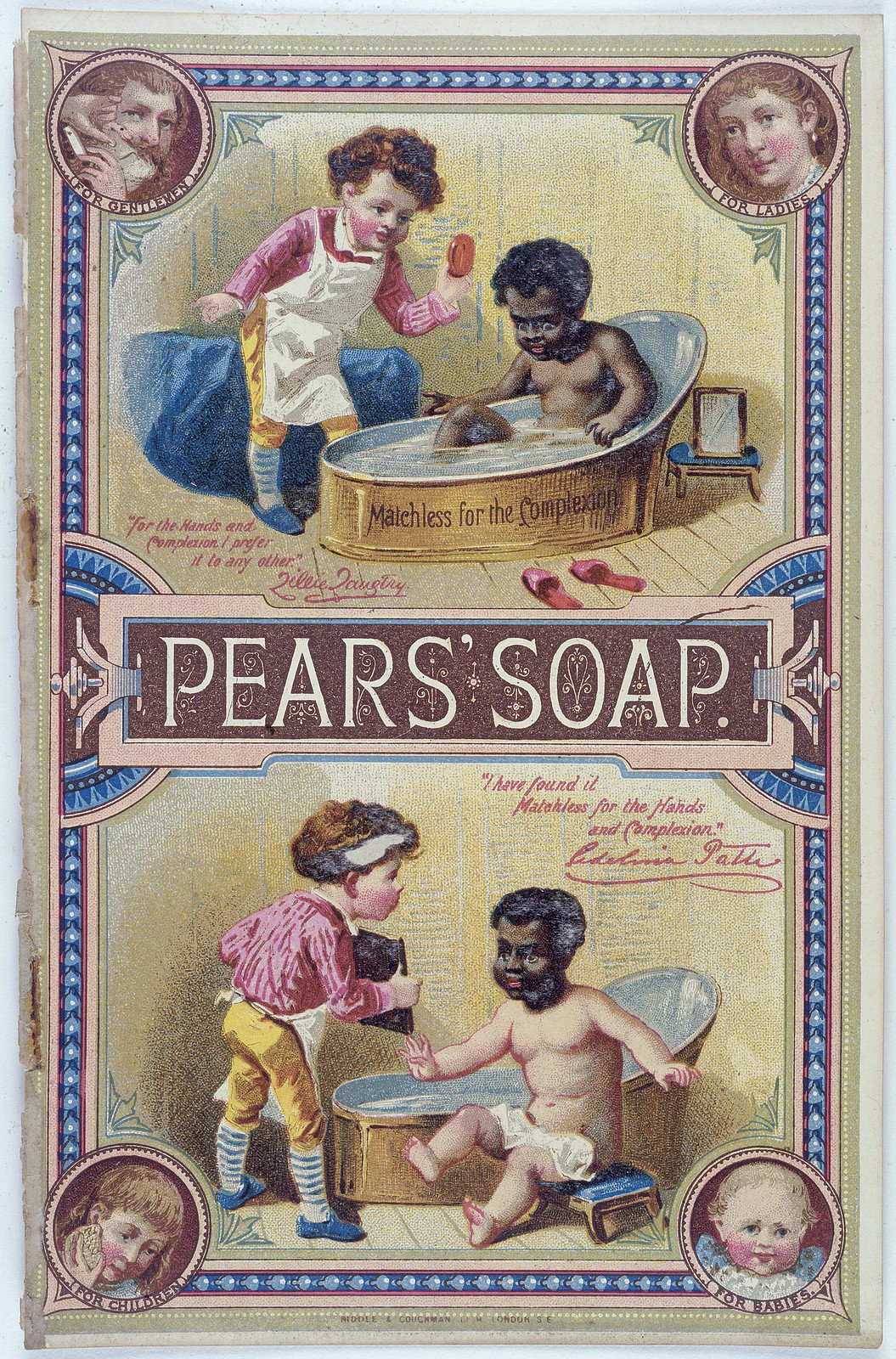

"The first step towards lightening The White Man's Burden is through teaching the virtues of cleanliness... Pears' Soap is a potent factor in brightening the dark corners of the earth."
— Pears' Soap advertisement, McClure's Magazine, Oct. 1899
An 1880s Pears' ad, based on the fable "Washing the Blackamoor White," ran the transformation as two panels: a white child bathing a Black child, then the same child — now drawn white "from the neck downwards" — admiring the result in a mirror. A follow-up campaign explicitly quoted Kipling's "White Man's Burden," framing soap purchase as participation in colonial "civilization." The equation — whiteness equals cleanliness equals worth — did not stay in the 1880s: it is the direct ancestor of the modern skin-lightening industry, estimated today at roughly $18 billion globally.
The same campaign also did something else for the first time: in 1882, actress Lillie Langtry became, by most historical accounts, the first celebrity in history to endorse a commercial product — for this soap. Opera singer Adelina Patti's testimonial ran alongside hers. Celebrity endorsement — the entire modern apparatus of paying a famous face to vouch for a product — and the "soap that washes Blackness away" campaign were not two different Pears' Soap stories. They were the same ad campaign.
The Great Underarm Campaign — inventing a hygiene problem
.jpg)
Body hair reframed, ad by ad, from unremarkable to "an embarrassing personal problem" — a woman without the razor risked being "unloved".
Before 1915, female body hair carried no real commercial weight — high necklines and long sleeves kept it out of view. When hemlines and sleeves shortened, Gillette launched the first razor marketed specifically to women and, within a decade of ad copy, converted a non-issue into an assumed hygienic default that most American women still don't question today.
Halitosis — a disease built from a Latin root

Edna has charm, grace, every social grace — except one flaw not even her closest friends will tell her about. She is, the ad implies, "often a bridesmaid, never a bride."
Listerine's marketers combined the Latin root for breath with a medical-sounding suffix to coin "halitosis," then ran a campaign built entirely around the fear that friends would let you fail socially rather than tell you the truth. Annual sales rose from about $100,000 in 1921 to $4 million by 1927 — roughly a 44x increase — making Listerine the third-largest print advertiser in America by decade's end.
"Feminine hygiene" — a euphemism sold as a marriage insurance policy
View a 1949 Lysol ad — Science History Institute Digital Collections → (in copyright; catalog record only)
"She was a jewel of a wife... with just one flaw. She was guilty of the 'ONE NEGLECT' that mars many marriages."
— Lysol feminine hygiene advertisement, 1930s
This wasn't a marketing choice made in a vacuum — it was a workaround for a law that made real contraception a crime. The 1873 Comstock Act classified birth control as "obscene," banning it from the U.S. mail; states passed their own versions on top of it. In 1915, Margaret Sanger's husband served 30 days in jail for mailing a pamphlet about contraception. Women didn't stop needing to control their own pregnancies because it was illegal — they just lost access to anything regulated or safe, and turned to whatever was sold as a "hygiene" product instead. Lysol was marketed into that exact gap: not a euphemism for nothing, a euphemism for the one thing the law wouldn't let anyone advertise honestly. The product caused burns and, by 1911, at least five recorded deaths from "uterine irrigation." From 1930 into the 1960s it led its category anyway, on fear of abandonment alone — a fear that was, for many women in that legal environment, financially real: marriage was, for most, the only available economic safety net.
The 97-pound weakling — manhood sold as a mail-order course

A bully kicks sand in a thin man's face at the beach. His girlfriend sighs. He orders the course. He returns and wins the fight — and the girl calls him "a real man after all."
Copywriter Charles Roman built an entire masculine cosmology on a single humiliation beat: "you cannot be a leader and a weakling." The campaign landed hardest during the Depression, when men who felt economically powerless were primed to treat physical size as the fixable half of the problem — muscle as proof of manhood, manhood as the right to female attention and social respect.
Torches of Freedom — feminism, borrowed without permission
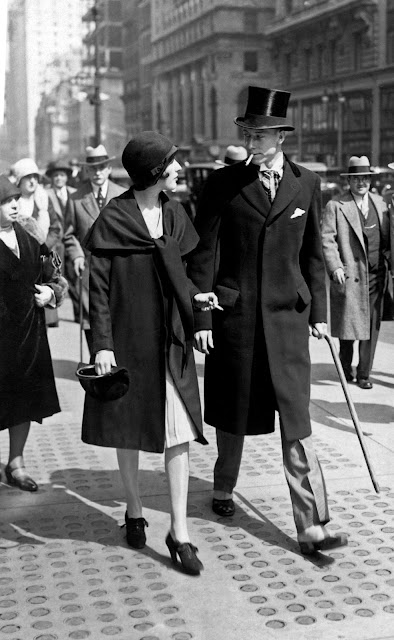
"In the interests of equality of the sexes... I and other young women will light another torch of freedom by smoking cigarettes while strolling on Fifth Avenue Easter Sunday."
— telegram drafted by Bernays, signed by his secretary posing as an independent organizer
This wasn't marketing into a neutral culture — it was marketing into a culture still fighting the same battle two decades earlier. On December 29, 1907, Café Martin, an elegant French restaurant on Fifth Avenue, announced women could smoke anywhere on the premises on New Year's Eve — owner Jean Martin argued "the smartest women in New York smoke," and other restaurants quickly followed. The backlash was immediate: on January 21, 1908, the New York City Board of Aldermen unanimously passed the Sullivan Ordinance, banning women from smoking in any public restaurant, hotel, or theater — violators' establishments faced fines of $5 to $25 or up to 10 days in jail. Two days later, at 1:20 a.m., a woman named Katie Mulcahey struck a match against a building on the Bowery and lit a cigarette. She was arrested on the spot, refused to give her address, told the night-court judge she'd never heard of the law and didn't care if she had, and was jailed when she couldn't pay the $5 fine.

A month after Mulcahey's arrest, satirical magazine Puck ran this centerfold — a fictional bar run by "Mrs. P.J. Gilligan," populated entirely by women smoking, drinking, gambling, and neglecting their children, captioned as a warning of what "the right to smoke in public" would supposedly unleash. The ordinance itself didn't survive the month — the mayor vetoed it as illegal on February 2 — but the underlying taboo, and the arrests it justified, persisted for another generation. That's the world Bernays staged his 1929 parade into: not smoking as a minor social debate, but smoking as something a woman had been jailed for within living memory, and mocked in the country's most popular satire magazine for merely asking to.
Bernays didn't buy an ad; he staged an event. A psychoanalyst told him cigarettes could read as phallic symbols of male power that women could seize. He had his own secretary pose as an unaffiliated feminist, recruit debutantes, and march them down Fifth Avenue smoking — with reporters tipped off in advance.
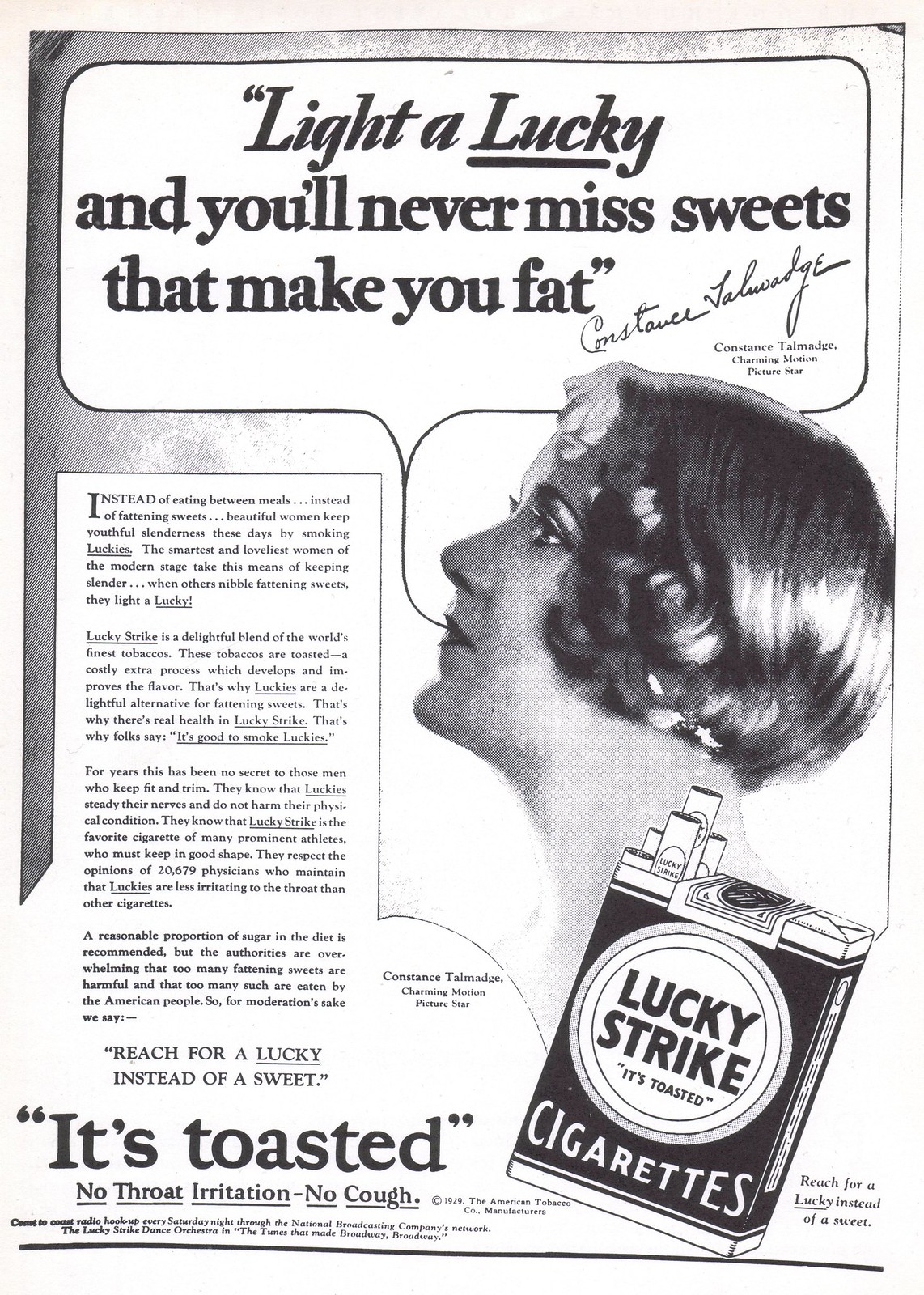
The same company ran a parallel campaign in the same year, aimed at the same women. The headline read: "To keep a slender figure, no one can deny... reach for a Lucky instead of a sweet." "Reach for a Lucky Instead of a Sweet" told women to smoke to suppress appetite and stay thin, image after image pairing a slender smoker against an implied "before," fronted by film stars like Constance Talmadge. The copy stacked three separate persuasion techniques in one paragraph: a celebrity endorsement, a diet-culture promise, and a medical-sounding statistic — "20,679 physicians" who supposedly agreed Luckies were "less irritating to the throat than other cigarettes." That number is precise enough to sound like real data and vague enough that no one could ever check it — the ad doesn't say who surveyed them, when, or by what method. It's the same appeal-to-authority mechanism Miss Linden's "registered nurse" credential ran a decade later, just wearing a lab coat instead of a nurse's uniform. It worked — Lucky Strike's market share rose roughly 300% in a single year and it became the best-selling cigarette in America into the 1950s. Read together, the two campaigns are the same exhibit: one sold the cigarette as liberation, the other sold it as a diet backed by invented authority, and both sold it as identity. Historian Vanessa Murphree's archival research has since complicated the legend — contemporary press coverage was more skeptical of the staged parade than Bernays' own later retellings claimed, a reminder that even the story of how effective this manipulation was has itself been partly manufactured. The campaign worked anyway: women's share of cigarette purchases rose from 5% in 1923 to 33.3% by 1965 — a real public-health cost dressed up as liberation, and it remains the textbook case of laundering a product through a real social movement.
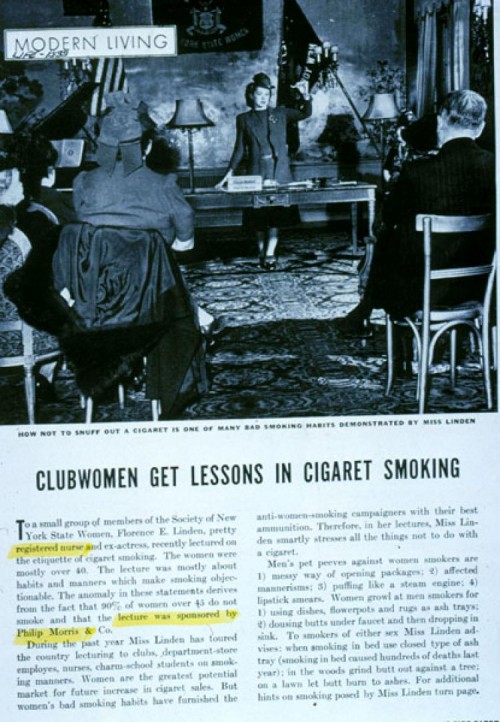
The market-expansion logic didn't stop at the parade. By the 1940s, Philip Morris was sponsoring cross-country lectures by Florence E. Linden, billed as a "registered nurse and ex-actress," teaching the etiquette of cigarette smoking to groups like the Society of New York State Women — an audience mostly over 49, in a decade when roughly 99% of women over 45 still didn't smoke at all. The lecture covered how to open a pack without fumbling, how not to smear lipstick, how not to "puff like a steam engine." It also included real harm-reduction advice buried in the sales pitch: smoking in bed, the article noted, had caused "hundreds of deaths" the previous year alone. The health credential wasn't incidental; it was the entire pitch, lending medical-sounding authority to what was, transparently, a sponsored sales-training tour aimed at the one demographic that hadn't been converted yet.
"A Diamond Is Forever" — a tradition invented in one generation
N.W. Ayer De Beers campaign records — Smithsonian NMAH archive → (image reproduction rights-restricted; catalog record only)
"There was no direct sale to be made. There was no brand name to be impressed on the public mind. There was simply an idea — the eternal emotional value surrounding the diamond."
— N.W. Ayer & Son, internal strategy document
Before 1938, only about 10% of engagement rings held a diamond. By 1951, jewelers were telling the agency "a girl is not engaged unless she has a diamond engagement ring." A single, unenforceable "custom" — plus the unofficial "two months' salary" rule — was manufactured within thirteen years and is now treated as ancient.
The Marlboro Man — silence sold as strength

No health claim. No product claim. Almost no copy at all — a solitary man, open land, and the assumption the viewer will supply the rest of the story.
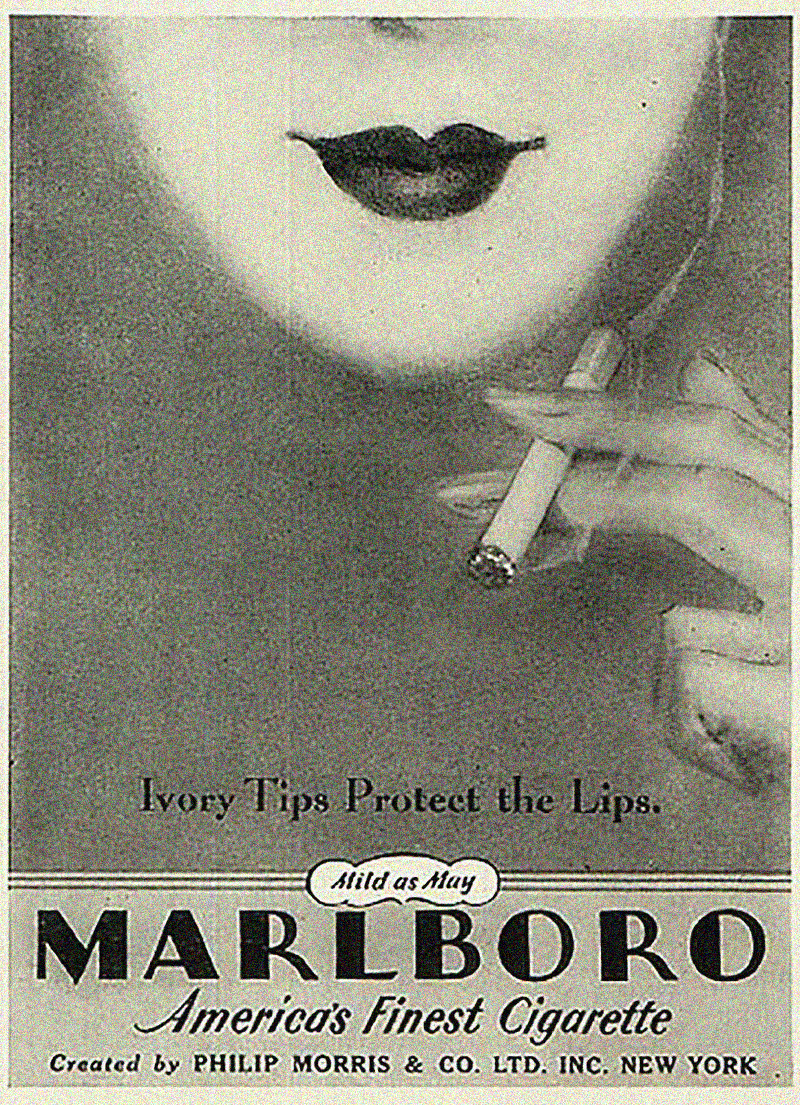
Marlboro launched as a mild "woman's cigarette" — its filter tips marketed as protection for lipstick, not lungs. When filters became a health necessity but read as culturally weak, Leo Burnett's answer was the cowboy: solitary, silent, physically capable, visibly unbothered. Within a year the brand moved from roughly 1% market share to a top-four U.S. cigarette — on an ideal of masculinity that offered no words, no vulnerability, and no need for anyone else.
A note on sourcing
Every exhibit above is drawn from historical reporting, academic sources, museum archives, and in several cases the surviving ad copy or internal agency memos themselves. This is a working research base rather than a finished bibliography — full citations for every claim are being compiled for publication, and we welcome corrections. See About for how to reach the research team.